
Abstract:
COVID-19 has disrupted not only human lives but also the quality of education especially in developing countries of the South- Asian region. This study elaborates the impact of COVID-19 on education sector and also illustrate the strategies followed by the management of Higher Education Institutions (HEIs). The systematic review of 23 most relevant research studies shows that the Pandemic has affected students’ learning, mental, physical, social and economical conditions badly. Particularly, students who do not afford the use of technological appliances are suffering more. HEIs need to have a smart online syllabus for various subjects. Furthermore, HEIs need to review their communication channel and technical assistance. The strategies implemented by HEIs during COVID-19 are useful and should be continued to keep offering quality education during upcoming academic sessions.
Key Words:
COVID-19, Online Learning, Higher Education
Introduction
The ongoing spread of infectious disease (Pandemic COVID-19) all over the world has various consequences economically, psychosocially and socially. In Pakistan, first two cases of Covid-19 were diagnosed on 26 February 2020 (Saqlain, Munir, Ahmed, Tahir, & Kamran, 2020). As per federal government orders, Higher Education Commission of Pakistan(HEC) has issued notifications to higher education institutions in Pakistan to start online classes by distance learning mode, rescheduled the exams (N. Ali, 2020). The situation goes on an increasing trend and the government had a complete lockdown on 23 March 2020. It was converted to smart lockdown on 9 May 2020. All educational institutes were also being closed in this situation as per government directions and SOPs (Salman et al., 2020).
According to Crawford (2020), 4 phases of pandemic response were: “rapid adaptation, improvement, consolidation and restoration”. The ongoing spread of Pandemic, frustration, boredom, social distancing, social lockdown with colleagues, class fellows, friends and teachers, economic and financial crises are significant factors that influence the quality of online education in higher education institutes in developing countries. HEIs had been confronted with an immediate and sudden shift to virtual teaching to continue teaching and learning activities. This will not only motivate students but also allowing them to follow SOPs of social distancing. This transition is decomposed into various inter-related dimensions that impact the quality of online learning, i.e. “a. Technical infrastructure & accessibility b. Distance learning competencies & pedagogies c. The field of study” (Marinoni, Van’t Land, & Jensen, 2020).
Technical Infrastructure and Accessibility
Online access and infrastructure are mandatory prerequisites while shifting physical classes to virtual classes. Two factors were reported in this aspect. First, HEIs were unable to move their physical classes to online because students do not have access to the internet at their homes in low and middle-income countries. While in case of lockdown and social distancing it would be difficult for students to complete their studies in the current academic year. On the other hand, HEIs having good internet access did not achieve optimize online learning due to lack of technical infrastructure. Even in the same institution, there was a possibility that many students have access to the internet while others are lacking it. So, in this situation, it would be difficult to complete the academic session. Few of institutes fully interrupt their educational activities in the lockdown era as they were unable to provide online teaching to all the students enrolled. One of the solutions to this problem was to provide technical assistance and material (tablets / phones) to students so as to minimize cause of disruption.
Distance Learning Competencies & Pedagogies
Different pedagogies should be followed while having online classes as it is a challenge for faculty and students as well. The quality of online learning was not good as compared to face-to-face education yet it is better than proving no education at all. HEIs reported that management should develop teaching and technical capacities to their staff while shifting towards online learning.
The Field of Study
The use of technical equipments differs from one field to an another. This is an another limitations towards online learning in fields of study for example practical cannot be replaced in case of online teaching in various disciplines like medicine, veterinary, dentist, creative arts study, music, design, etc.
The objective of this study is to elaborate the potential of impact of COVID-19 Pandemic on quality of education and e learning of students in higher education institutions by incorporating existing literature and to elaborate the challenges and obstacles of online quality education in HEIs of developing countries in COVID-19 Pandemic lockdown. Literature showed the closure of educational institutes as a strategy to control transmission of pandemic and curing health of students as well.No doubt it has severe adverse impact on students’ acdemics,assessment,learning etc.COVID-19 pandemic has not only social life,financial conditions,losing part time jobs,social distancing frustration,anxiety as well.(Brooks et al., 2020). Delay in reopening of educational institutes caused negative impact on mental health and academics of students (Cao et al., 2020). Long quarantine period for students has disabled them mentally and performance of learning activities and task. This study is an extension of the work of Basilaia and Kvavadze (2020) who recommended further study to investigate the quality of online learning in HEIs.
Literature Review
COVID-19 pandemic is cause of creating significant global challenges and opportunities for higher education institutions(Crawford et al., 2020). COVID-19 has adversely impacted the traditional learning of HEIs. HEIs management opted for online classes as an alternative ay for providing quality education. As the online classes is protecting the health of students as well as faculty from spreading of COVID-19 Pandemic. Online learning is not an effective learning way as compared to traditional learning. In the case of developing countries like Pakistan; online learning is not an effective way to produce desired results. Reasons behind the lack of quality education in COVID-19 are lack of proper internet access, smartphone gadgets, and monetary issues. On-campus learning is an effective learning mode to maintain the quality of education. Lack of motivation is one of the obstacles in maintaining online quality education. Students participate actively in the face to face classes, projects, assignments, etc. Students in traditional classes are more motivated as compared to online classes. In the initial period of lockdown, due to the limited resources of several HEIs in Pakistan, management was not able to manage effective online classes (Adnan & Anwar, 2020). Students belonging from underdeveloped areas in developing countries are deprived of internet facility, smartphone gadgets, etc. The international association of universities reported that a greater percentage of students’ mobility was cancelled in first half of April 2020 ((Marinoni, Van’t Land, & Jensen, 2020).
The main factors responsible for online quality education are internet access, expensive data package, signals strength issues to have a video conference online classes, awareness of using various online educational tools, platform, and comfortable electronic communication. Almanthari, Maulina, and Bruce (2020) explored the challenges and opportunities linked with online learning and the quality of education in COVID-19 Pandemic era. Various researches have been carried out and mentioned the advantages and challenges associated with online learning activities and initiatives taken by various stakeholders of HEIs. However, according to Almanthari et al. (2020) students’ perception is most important in the Pandemic COVID-19 era. Various research studies on online learning in HEIs of Pakistan have been conducted that explored challenges and opportunities associated with online learning in HEIs of Pakistan (Ali & Ahmad, 2011; Bukhsh, 2007; Farid et al., 2015; Yousuf, 2007). It was concluded by the above studies that online learning was considered not essential for learning. According to Ali (2020) the interaction of teacher-student, on-campus learning, suitable and up to date curriculum are key components of traditional learning which are lacking in the case of online learning.
Spread of the COVID-19 pandemic leads HEIs to adopt various online teaching and learning methodologies. 85% of international students surveyed reported that face to face classes are replaced by online, totally or partially. 12% of HEIs suspended their classes completely and were developing strategies and methodologies for online teaching and learning and self-study means (Marinoni, Van’t Land, & Jensen, 2020). According to the international association of universities survey, HEIs having the infrastructure to communicate with students does not reveal any effectiveness (Marinoni, Van’t Land, & Jensen, 2020). One of the advantages of online classes is to involve an external expert who can provide more knowledge and information as well (Ferdig, Baumgartner, Hartshorne, Kaplan-Rakowski, & Mouza, 2020). In the present condition of Pandemic COVID-19, all HEIs should have to implement online learning regardless of their limited resources. According to Abbas, Ahmed, Khalid, and Yasmeen (2017), the adoption of ICT in HEIs cannot be ignored even due to a lack of limited resources. No separate funds are allocated for HEIs in Pakistan (Kayani, 2005).
South Asia is one of the oldest civilization in world and it occupies central predominant position economically,socially and politically.Tthey are developing countries and theri common objective is to promote economic growth,education,health,cultural development,social progress and prosperity globally. Bangladesh has diagnosed its first case of COVID-19 on 8 March,2020 (Monjur & Hassan, 2020). Bangladesh has 4 million students in five thousand higher education instututions both public and private sector. While considering the health of students ,universities has opted strategy to temporary close educationakl institutes (Ahmed, Ahmed, Alim, Khan, & Jobe, 2020). Majority of Indian students enrolled in international universuities are leaving such countries as the situation is going to be worsen day after day (Jena, 2020). India is adapting new age of learning but still there are obstacles on the way to online learning as only 45 crore of total population have an acess to internet (Jena, 2020). Nepal is situated at foothills of Himalayas, encountered its first pandemic case due to arrival of foreigners (Mohydin, 2020) .Government of Nepal has a slow steps regarding precautionary measures in controlling spread of pandemic COVID-19. First case in Nepal which was tested positive was reported on 25 january,2020 and it was due to arrival of a Nepali student from city of China,Wuhan
In India ,the first case of COVID-19 was tested positive on January 30, 2020 in state of Kerala and its origin was travelling of the affected person from Wuhan, China. First death was reported on 12 March , 2020 and on that day Janta Curfew was observed for 14 hours so as to control the spread of pandemic COVID-19. Proper lockdown was announced on March 25, 2020 by Indian prime minister. More than 32 crore students India were affected adversely by the spread of pandemic and lockdown. India has adapterd latest e-learning tools and techniques but even then 45 crore of its total population has an access to internet or elearning rest of the p[oipultation is either living in remote areas or are deprived of internet access and technical assistance and ICT facilities.
In Pakistan, the first case was tested positive in karachi on February 26, 2020. Pakistan is one of the developing countries in south asian context and is unable to run effectively the virtual education approaches like that are followed by other developed countries China,USA ,EU etc.COVID-19 has poorly affected the education of students belonging to remote areas (Zahra, Gul, Iqbal, Ghafoor, & Ambreen, 2020).
First confirmed case of pandemic covid-19 in srilanka was tested positive on january 27, 2020. He was a chinese tourist . Due to the closue of educational institutes in Srilanka,online techniques of education was considered as an alternative solution so as to continue education.online teaching and learning ahs become an integral part in srilanka higher education institutions.But various challenges and obstacles were there that hindered the quality of e learning (Rameez, Fowsar, & Lumna, 2020).
The COVID-19 pandemic has quickly led to closure of Higher education institutions around the world with anticipation that public health could be restored by following SOPs of social distancing (Murphy, 2020). In this era of the spread of pandemic COVID-19 students who are connected virtually but separated physically in international universities. Students exposed their emotions, benefits, challenges & coping strategies as well (Peters et al., 2020). In the lockdown era, all the HEIs in developing countries that are recognized by HEC used online LMS, to ensure effective online learning (Ali, 2020). Many of HEIs in developing countries suspend their online classes due to lack of resources and LMS. Only very few highly ranked private sector HEIs in developing countries carried on their online classes immediately and effectively. In the current situation of the rapid spread of Pandemic COVID-19, researchers have mentioned it as crisis learning (Pace, Pettit, & Barker, 2020). Academic institutes need to update their curriculum as smart syllabus, new learning methods, and strategies (Toquero, 2020).
HEIs are the hub of social interaction as student teachers communicate and interact at this platform and perform their learning activities as well as educational learning. In the case of online learning, response time is another obstacle in quality education in developing countries in the pandemic Era. Often online class material is discussed via email which requires response time (Zhong, 2020). Sharing of knowledge, skills, information and ideas is partially missing from online learning (Britt, 2006). Online learning is implemented and effective only in digitally advanced countries(Basilaia & Kvavadze, 2020). While in the case of developing countries like India, Nepal, Srilanka, Pakistan and Bangladesh many learning, teaching and administrative duties are ineffective (Salam, Jianqiu, Pathan, & Lei, 2017). Affordable reliable strong internet package again is creating an obstacle in online learning in rural areas of Pakistan (Wains & Mahmood, 2008). The majority of students have no laptops they are using smartphones. Many online class contents cannot be assessed by using smartphones.
Methodology
This research is based on a systematic review of available literature on COVID-19 and online learning during pandemic COVID-19. The systematic review ensures the use of maximum information and metadata. Social science research journals, SSRN, educational management journals, journals of distance education, research papers presented in international conferences on quality education issues due to the spread of pandemic COVID-19. Those Studies were selected which were related to issues in the evaluation of quality education in higher education institutions due to the spread of pandemic COVID-19. Out of 220 articles screened, 23 articles were included in this study. These 23 studies evaluated the impact of COVID-19 on quality of education in case of higher education institutions.
Table 1. Inclusion & Exclusion Criteria
| Inclusion Criteria width="268" valign="top">Exclusion Criteria | > Reviews, editorials, conference proceedings, international reports, etc. width="268" valign="top">All studies published before 2020 | > Research studies elaborating same research problem, obstacles, challenges width="268" valign="top">Duplicate articles from the same institution, the same author | > Higher education institutions(any discipline) width="268" valign="top">Elementary ,Primary institutions | > Only students perspective of learning width="268" valign="top">Various stakeholders, faculty, government, parents. | > Systematic review articles width="268" valign="top">Observational data | > Qualitative outcomes width="268" valign="top">Quantitative outcomes | > Only English language research papers. width="268" valign="top">Other than English language research papers. |
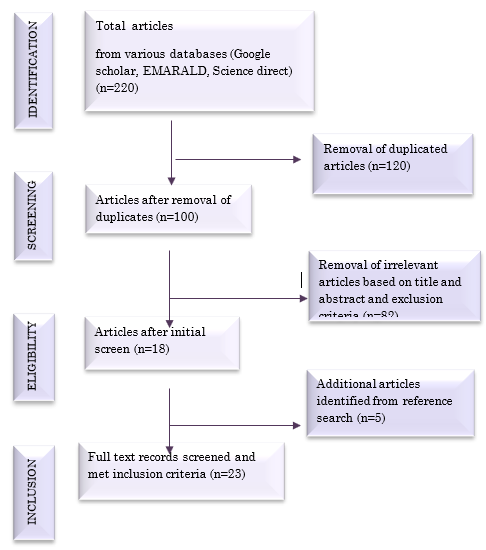
Table 2. Systematic Review of COVID-19 Studies on HEIs in South- Asian Countries

Table 2

Table 3
| Research problem width="90" valign="top">Authors width="47" valign="top">Year width="69" valign="top">Country width="133" valign="top">Findings width="192" valign="top">Recommendations/Coping strategies | > Digital poverty is major obstacle to efficacy of e learning. inadequate teacher and peer interaction had much stress. width="90" valign="top"> width="47" valign="top">2020 width="69" valign="top">Srilanka width="133" valign="top">Universities need to undertake proactive action urgently to modify the virtual training methods, addressing the issues of digital poverty is likely to significantly enhance the efficacy of virtual learning. width="192" valign="top">• Conduct only virtual small group discussions.>• Limiting the sessions to 45 minutes. ’Make lectures more interactive.>• Be flexible and lecturers punctual.>• Good condition microphones and training for lecturers. >• Classes must be live that allow students to clarify queries. >• Lecturers must record the lectures and upload them to google classroom.>• Must upgrade technical as well as internet usage/package issues and must reduce data package charges. Encourage students to put their cameras on for classes. |
Conclusion and Recommendations
This study after a systematic review of the literature, concluded that Pandemic Covid-19 has a significant adverse impact on the social, mental, and economic health of students of HEIs in South Asian countries (Pakistan,Nepal,Bangladesh,Srilanka and India). It ellaborated not only adverse impact of covid-19 on higher education institutions but also suggests few recommendations on basis of literature review. COVID-19 pandemic is the cause of creating educational disturbance while government of south Asian countries has no firm control over its spread. Online learning can never be a good alternate to face to face learning.The spread of pandemic COVID-19 has created good opportunities for developing technicians,human resources, IT infrastructure in higher education institutions. Some sort of short term measures should be implemented immediately in education sector otherwise it will be collapsed. Both the HEIs and students are facing some sort of problems caused by the pandemic and definitely, this will help them out to search most suitable solution. HEIs reacted smartly in handling discrepancies caused by COVID-19 and such smart steps proved successful. Students faced a lot of problems like mental health, anxiety, and isolation. Measures should be taken to support and prevent such problems. In addition to all this, students were the victim of racism also. HEIs need to have careful planning for handling such cases at an international level. HEIs and governments administration need to collaborate in a close manner to provide better and affordable learning opportunities. Various coping strategies are adopted not only by universities’ management but also by students, parents but in a limited sphere. Factors responsible for the poor quality of education in Pandemic Covid-19 are no face-to-face interaction of students with the teachers, lack of socialization and internet access issues, etc. The administration of HEIs needs to be aware of the determinants and policy formulation to ensure quality education during the spread of pandemic COVID-19. Solutions implemented by HEIs during COVID-19 were useful and should be continued to keep offering quality education for the upcoming academic session. The reopening of university campuses will generate contrast between face-to-face and online learning, physical mobility and virtual exchange. After a systematic review of literature, it is recommended that:
• Higher education institutes should coordinate with government agencies and World Health Organization to improve the quality of education by following SOPs.
• HEIs of developing countries need to have a smart online syllabus for various subjects.
• Students need computer and technological skills to manage online educational platforms.
• HEIs mostly need to follow coping strategies in form of educational continuity like the use of innovative technology: digital and mobile technology along with traditional technology i.e. radio and TV.
• There is a need to support students at the academic level. Lack of contingency plans in institutions, their host universities, and foreign partner institutions are almost one quarter and harm students’ support.
• HEIs need to review their communication channel, the effectiveness of information delivered, use of language and technical assistance.
• To ensure implementation of strategies when students return on reopening of universities.
• Put strategies to recover lost e-learning .
• Understanding students’ family financial issues and supporting accordingly.
• Get assistance from local trained volunteers who will assist in e-learning.
• Interaction with parents both online and offline.
• Following SOPs provided by international universities.
• Train faculy as well as students to have access on technology usage.
• After lockdown educational institutions can be open on alternate days.
• Assessment of online teaching and learning should be different from face to face teaching and learning.
• Conduct small groop discussions online.
• Online lecvturers should be upto 45 minutes maximum.
• Make online lectures more interactive and solving students queries as well.
• Ensure faculty punctuality while taking online classes.
References
- Abbas, W., Ahmed, M., Khalid, R., & Yasmeen, T. (2017). Analyzing the factors that can limit the acceptability to introduce new specializations in higher education institutions. International Journal of Educational Management.
- Adnan, M., & Anwar, K. (2020). Online Learning amid the COVID-19 Pandemic: Students' Perspectives. Online Submission, 2(1), 45-51.
- Ahmed, O., Ahmed, M. Z., Alim, S. M. A. H. M., Khan, M. A. U., & Jobe, M. C. (2020). COVID-19 outbreak in Bangladesh and associated psychological problems: An online survey. Death Studies, 1-10.
- Ali, A., & Ahmad, I. (2011). Key factors for determining student satisfaction in distance learning courses: A study of Allama Iqbal Open University. Contemporary Educational Technology, 2(2), 118-134.
- Ali, N. (2020). Students disappointed with online teaching system amid COVID-19. Retrieved from Daily Times:
- Almanthari, A., Maulina, S., & Bruce, S. (2020). Secondary school mathematics teachers' views on Elearning implementation barriers during the COVID-19 pandemic: the case of Indonesia. Eurasia Journal of Mathematics, Science and Technology Education, 16(7), em1860.
- Basilaia, G., & Kvavadze, D. (2020). Transition to online education in schools during a SARS-CoV-2 coronavirus (COVID-19) pandemic in Georgia. Pedagogical Research, 5(4).
- Britt, R. (2006). Online education: a survey of faculty and students.
- Radiologic Technology, 77(3), 183- 190.
- Brooks, S. K., Webster, R. K., Smith, L. E., Woodland, L., Wessely, S., Greenberg, N., & Rubin, G. J. (2020). The psychological impact of quarantine and how to reduce it: rapid review of the evidence. The lancet, 395(10227), 912-920.
- Bukhsh, Q. (2007). Empowerment of women through distance education in Pakistan. Turkish Online Journal of Distance Education, 8(4), 135-151.
- Cao, W., Fang, Z., Hou, G., Han, M., Xu, X., Dong, J., & Zheng, J. (2020). The psychological impact of the COVID19 epidemic on college students in China. Psychiatry research, 287, 112934.
- Crawford, J., Butler-Henderson, K., Rudolph, J., Malkawi, B., Glowatz, M., Burton, R., . . . Lam, S. (2020). COVID-19: 20 countries' higher education intra-period digital pedagogy responses. Journal of Applied Learning & Teaching, 3(1), 1- 20.
- Dawadi, S., Giri, R., & Simkhada, P. (2020). Impact of COVID-19 on the Education Sector in NepalChallenges and Coping Strategies. Sage Submissions. Preprint. doi: , 12344336, v1.
- Dhahri, A. A., Arain, S. Y., Memon, A. M., Rao, A., Khan, M. M., Hafeez, G., . . . Iqbal, M. H. (2020). The psychological impact of COVID-19 on medical education of final year students in Pakistan: A cross-sectional study. Annals of Medicine and Surgery, 60, 445-450.
- Dutta, S., & Smita, M. K. (2020). The impact of COVID-19 pandemic on tertiary education in Bangladesh: students' perspectives. Open Journal of Social Sciences, 8(09), 53.
- Farid, S., Ahmad, R., Niaz, I. A., Arif, M., Shamshirband, S., & Khattak, M. D. (2015). Identification and prioritization of critical issues for the promotion of e-learning in Pakistan. Computers in Human Behavior, 51, 161-171
- Ferdig, R. E., Baumgartner, E., Hartshorne, R., Kaplan-Rakowski, R., & Mouza, C. (2020). Teaching, technology, and teacher education during the COVID-19 pandemic: Stories from the field: Association for the Advancement of Computing in Education.
- Jena, P. K. (2020). Impact of pandemic COVID-19 on education in India. International Journal of Current Research (IJCR), 12.
- Kayani, U. R. (2005). FOSS Localization: A Solution for the ICT dilemma of developing countries. Paper presented at the 2005 Pakistan Section Multitopic Conference.
- Marinoni, G., Van't Land, H., & Jensen, T. (2020). The impact of Covid-19 on higher education around the world. IAU Global Survey Report.
- Mohydin, R. (2020). The coronavirus pandemic in South Asia: Challenges and responses: TRT World Press.
- Monjur, M. R., & Hassan, M. Z. (2020). Early phases of COVID-19 management in a low-income country: Bangladesh. Infection Control & Hospital Epidemiology, 41(9), 1116-1117.
- Murphy, M. P. (2020). COVID-19 and emergency eLearning: Consequences of the securitization of higher education for post-pandemic pedagogy. Contemporary Security Policy, 41(3), 492-505
- Pace, C., Pettit, S. K., & Barker, K. S. (2020). Best practices in middle level quaranteaching: Strategies, tips and resources amidst COVID-19. Becoming: Journal of the Georgia Association for Middle Level Education, 31(1), 2.
- Peters, M. A., Wang, H., Ogunniran, M. O., Huang, Y., Green, B., Chunga, J. O., . . . Mou, C. (2020). China's internationalized higher education during Covid-19: Collective student autoethnography. Postdigital science and education, 2, 968-988.
- Rameez, A., Fowsar, M., & Lumna, N. (2020). Impact of Covid-19 on Higher Education Sectors in Sri Lanka: A Study based on South Eastern University of Sri Lanka
- Salam, S., Jianqiu, Z., Pathan, Z. H., & Lei, W. (2017). Strategic barriers in the effective integration of ICT in the public schools of Pakistan. Paper presented at the Proceedings of the 2017 International Conference on Computer Science and Artificial Intelligence
- Salman, M., Asif, N., Mustafa, Z. U., Khan, T. M., Shehzadi, N., Hussain, K., . . . Khan, M. T. (2020). Psychological impact of COVID-19 on Pakistani university students and how they are coping. Medrxiv.
- Sandarenu, K. (2021). University Student Views on The Impact of COVID-19 Pandemic on Their University Life and Education in Sri Lanka. University Student Views on The Impact of COVID-19 Pandemic on Their University Life and Education in Sri Lanka., 71(1), 15-15.
- Saqlain, M., Munir, M. M., Ahmed, A., Tahir, A. H., & Kamran, S. (2020). Is Pakistan prepared to tackle the coronavirus epidemic? Drugs & Therapy Perspectives, 1-2.
- Shahzad, S. K., Hussain, J., Sadaf, N., Sarwat, S., Ghani, U., & Saleem, R. (2020). Impact of Virtual Teaching on ESL Learners' Attitudes under COVID-19 Circumstances at Post Graduate Level in Pakistan. English Language Teaching, 13(9), 1-9.
- Toquero, C. M. (2020). Challenges and Opportunities for Higher Education Amid the COVID-19 Pandemic: The Philippine Context. Pedagogical Research, 5(4).
- Wains, S. I., & Mahmood, W. (2008). Integrating m-learning with elearning. Paper presented at the Proceedings of the 9th ACM SIGITE conference on Information technology education.
- Yousuf, M. I. (2007). Effectiveness of mobile learning in distance education. Turkish Online Journal of Distance Education, 8(4), 114-124.
- Zahra, F., Gul, A., Iqbal, A., Ghafoor, T., & Ambreen, A. (2020). The Impact of Covid-19 on Rural Areas Students of Pakistan: Moderating Role of HEC Policy and Internet Service. Asian Journal of Contemporary Education, 4(2), 69-79.
- Zhong, R. (2020). The coronavirus exposes education's digital divide. The New York Times, 18.
Cite this article
-
APA : Fatima, S., Ahmad, N., & Fatima, S. (2021). Impact of COVID-19 and Coping Policies Implemented by Higher Education Institutions in South-Asian Countries: Systematic Review. Global Economics Review, VI(I), 11-23. https://doi.org/10.31703/ger.2021(VI-I).02
-
CHICAGO : Fatima, Shaheen, Nisar Ahmad, and Samreen Fatima. 2021. "Impact of COVID-19 and Coping Policies Implemented by Higher Education Institutions in South-Asian Countries: Systematic Review." Global Economics Review, VI (I): 11-23 doi: 10.31703/ger.2021(VI-I).02
-
HARVARD : FATIMA, S., AHMAD, N. & FATIMA, S. 2021. Impact of COVID-19 and Coping Policies Implemented by Higher Education Institutions in South-Asian Countries: Systematic Review. Global Economics Review, VI, 11-23.
-
MHRA : Fatima, Shaheen, Nisar Ahmad, and Samreen Fatima. 2021. "Impact of COVID-19 and Coping Policies Implemented by Higher Education Institutions in South-Asian Countries: Systematic Review." Global Economics Review, VI: 11-23
-
MLA : Fatima, Shaheen, Nisar Ahmad, and Samreen Fatima. "Impact of COVID-19 and Coping Policies Implemented by Higher Education Institutions in South-Asian Countries: Systematic Review." Global Economics Review, VI.I (2021): 11-23 Print.
-
OXFORD : Fatima, Shaheen, Ahmad, Nisar, and Fatima, Samreen (2021), "Impact of COVID-19 and Coping Policies Implemented by Higher Education Institutions in South-Asian Countries: Systematic Review", Global Economics Review, VI (I), 11-23
-
TURABIAN : Fatima, Shaheen, Nisar Ahmad, and Samreen Fatima. "Impact of COVID-19 and Coping Policies Implemented by Higher Education Institutions in South-Asian Countries: Systematic Review." Global Economics Review VI, no. I (2021): 11-23. https://doi.org/10.31703/ger.2021(VI-I).02